
Thailand’s new parliament elects new PM
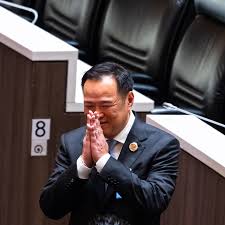
Thailand's newly elected Parliament has officially re-elected Anutin Charnvirakul as Prime Minister today, March 19, 2026.
The vote follows the February 2026 general election, which saw a significant conservative shift in Thai politics. Anutin, the leader of the Bhumjaithai Party, secured a decisive victory to remain the country’s 32nd Prime Minister.
The Election Results
The parliamentary session in Bangkok concluded with a clear majority for the incumbent:
Anutin Charnvirakul (Bhumjaithai): 293 votes.
Natthaphong Ruengpanyawut (People's Party): 119 votes.
Abstentions: 86 votes.
Political Context: The "Blue Wave"The election marked the first major conservative win in years, often referred to by local media as the "Blue Wave" (the color of the Bhumjaithai Party),
Nationalism: Anutin’s popularity surged following his firm stance during the 2025 border conflict with Cambodia. His campaign focused heavily on national security, including proposals to build a border wall and recruit 100,000 volunteer soldiers.
The Coalition: To secure a governing majority, Bhumjaithai (191 seats) formed a coalition with the Pheu Thai Party (74 seats) and several smaller groups.
The Opposition: The progressive People's Party, which finished second with 120 seats, will lead the opposition. Despite winning the popular vote in Bangkok, they were unable to overcome the conservative coalition's numbers in parliament.
Anutin first took office in September 2025 following the removal of his predecessor, Paetongtarn Shinawatra, who was ousted by the Constitutional Court over an ethics breach related to her communications with Cambodian leadership. Anutin later dissolved parliament in December 2025 to call for these snap elections.
What’s Next?
Royal Endorsement: Anutin is now awaiting formal endorsement from King Maha Vajiralongkorn.
Cabinet Formation: The new cabinet is expected to be announced in the coming weeks, with a heavy focus on economic stimulus and energy costs due to the ongoing regional conflicts affecting global fuel prices.
The re-election of Anutin Charnvirakul as Thailand’s Prime Minister today, March 19, 2026, solidifies a powerful conservative coalition. Following the parliamentary vote, the government is moving quickly to finalize its cabinet and roll out its "stability-first" economic agenda.
Cabinet Distribution & Coalition Dynamics
The new governing alliance is led by the Bhumjaithai Party and supported by 15 other parties, including the Pheu Thai Party and the Kla Tham Party.
Bhumjaithai Party (191 seats): As the lead party, they are expected to control the most influential "Grade A" ministries, including Interior, Transport, and Public Health. This allows them to maintain the provincial patronage networks that fueled their election victory.
Pheu Thai Party (74 seats): Despite a historically poor showing (coming in third), Pheu Thai remains a key partner. Early reports suggest they will likely retain the Ministry of Finance and potentially Foreign Affairs to project economic continuity to international investors.
Kla Tham Party (~58 seats): Led by former Deputy PM Thammanat Prompao, this party is expected to play a major role in Agriculture and Natural Resources.
Excluded: Notably, several "political princelings" and figures associated with the previous Shinawatra-led administration have been sidelined to appease the conservative establishment.
Key Economic Policies for 2026
Anutin’s second term is built on a "bandage and boost" strategy—providing immediate relief to the grassroots while maintaining strict fiscal discipline for the macroeconomy.
1. The "Kon La Khrueng Plus" (Half-and-Half) Scheme
This is the administration's flagship consumption stimulus. The government will subsidize 50% to 60% of consumer purchases at local shops. It is designed to inject liquidity directly into small businesses rather than large corporations.
2. Debt Relief & Liquidity
Household Debt: A major plan to assist individuals with debts under ฿100,000 ($2,700).
SME Support: Small and medium enterprises can access liquidity injections of up to ฿1 million ($27,000) to help them navigate high energy costs and a volatile Thai Baht.
3. Energy & Infrastructure
Cost Reduction: Immediate measures to lower electricity, gasoline, and public transport tolls.
Solar Initiative: Promoting household solar energy generation to reduce long-term dependence on the grid and lower monthly bills.
4. The "National Lottery" Stimulus
A unique populist proposal involves a daily national lottery where nine winners (specifically targeting farmers, seniors, and community volunteers) receive ฿1 million each.
Strategic Focus: National Security
Unlike previous administrations that prioritized regional trade, Anutin’s government is leaning into nationalism. This includes a massive infrastructure project to build a permanent wall on the Cambodian border and the recruitment of 100,000 volunteer soldiers following the border clashes in late 2025.