
Nigeria, Britain set for fresh security alliance
Nigeria and the United Kingdom are currently formalizing a fresh security alliance as part of President Bola Tinubu’s historic two-day state visit to the UK (March 18–19, 2026). This visit marks the first time a Nigerian president has been hosted for a state visit in 37 years.
The alliance centers on a shared commitment to regional stability, particularly in the Sahel, and modernizing Nigeria's defense capabilities.
The new agreements, discussed during meetings with King Charles III and Prime Minister Keir Starmer, focus on three primary areas:
Counter-Terrorism & Sahel Stability: President Tinubu emphasized that Nigeria carries an "enormous responsibility" for regional stability. The partnership will involve deeper UK support for Nigeria’s fight against jihadist insurgencies that have roots in the Sahel region.
Defense Modernization: The alliance builds on the 2024 Strategic Partnership, moving toward formalizing agreements in training, intelligence sharing, and counter-IED (Improvised Explosive Device) operations.
Maritime & Cyber Security: A significant portion of the cooperation involves securing Nigeria’s "Blue Economy." This includes technical capacity building for maritime security and tackling the growing threat of cyber fraud and organized crime.
Economic and Infrastructure Context
The security alliance is being signed alongside major economic deals to demonstrate a "partnership of equals." Notable highlights include:
£746 Million Port Deal: Financing for the refurbishment of the Lagos Port Complex (Apapa) and Tin Can Island Port, aimed at modernizing maritime infrastructure.
Trade & Investment: Discussions to expand bilateral trade, which reached £8.1 billion in late 2025.
The Nigerian delegation includes top security officials to finalize the operational details of the alliance:
Christopher Musa (Minister of Defence)
Nuhu Ribadu (National Security Adviser)
Mohammed Mohammed (Director-General of the National Intelligence Agency)
This visit has faced some domestic criticism in Nigeria, with opposition figures questioning the timing of the trip following recent terrorist attacks in Borno State. However, the administration maintains that these international alliances are the "essential" long-term solution to ending such violence.
The landmark agreements being signed during President Tinubu’s state visit (March 18–19, 2026) represent a significant "reset" in the relationship between Nigeria and the UK, shifting toward a "partnership of equals" centered on infrastructure and mutual security.
1. The £746 Million Port Modernization Deal
This is the most ambitious port upgrade in Nigeria in nearly 50 years. The project is a centerpiece of the government's "Renewed Hope" agenda to unlock the potential of the Marine and Blue Economy.
Financing: The deal is backed by UK Export Finance (UKEF), which provides loan-backed financing for major international projects.
Target Sites: It focuses on the Lagos Port Complex (Apapa Quays) and the Tin Can Island Port Complex. Together, these handle over 70% of Nigeria’s import and export traffic.
Key Goals:
Digitalization: Moving from paper-based to automated processes to reduce "dwell times" and corruption.
Infrastructure: Replacing colonial-era equipment with advanced cargo-handling systems.
Efficiency: Drastically reducing vessel turnaround times to compete with other West African hubs.
Strategic Impact: The Minister of Marine and Blue Economy, Adegboyega Oyetola, noted that these ports have not seen an overhaul of this scale since they were commissioned (Apapa in 1913 and Tin Can in 1977).
2. The 2024 Strategic Partnership (The Foundation)
The security alliance today is the "operationalization" of the Nigeria-UK Strategic Partnership signed in November 2024. That agreement moved the relationship beyond traditional aid into six specific pillars:
Focus Area
National Security Intelligence sharing, counter-IED (Explosives) training, and maritime policing.
Growth & Jobs Implementing the Enhanced Trade and Investment Partnership (ETIP) to boost the current £8.1 billion annual bilateral trade.
Regional Stability Joint efforts to contain the spread of terrorism from the Sahel into the Gulf of Guinea.
Migration & Justice Strengthening border security and tackling transnational organized crime and "cyber-enabled" fraud.
Modernized Development Moving away from "dependency models" toward technical expertise and shared investment.
People-to-People Leveraging the massive Nigerian diaspora in the UK (specifically in the NHS and tech sectors).
Why This Visit Is "Historic"
First in 37 Years: The last Nigerian President to receive a full UK State Visit was Ibrahim Babangida in 1989.
Windsor Castle: President Tinubu is the first Nigerian leader to be hosted by the British monarch at Windsor Castle.
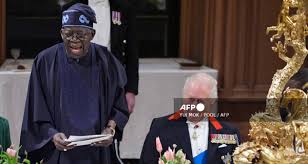
Personal Connection: During the State Banquet, the President recalled his years in the UK as a pro-democracy activist during the Abacha military era, thanking the UK for providing him refuge and protection.