

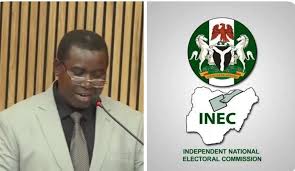
2027 polls won’t be 100% perfect, INEC chair warns
The Chairman of the Independent National Electoral Commission, Prof. Joash Amupitan, has reassured Nigerians that the commission possesses the capability to electronically transmit election results in 2027. However, he warned that it may not be able to ensure a "100 percent perfect election."
Amupitan made these remarks on Sunday during the Citizens’ Town Hall programme, which was broadcast live on major television networks and titled, ‘Electoral Act 2026: What it means for your votes and the 2027 elections.’
The live electoral debate was hosted by the well-known presenter Seun Okinbaloye and the Executive Director of Yiaga Africa, Samson Itodo.
Present at the event were the National Chairman of the All Progressives Congress, Nentawe Yilwatda, the Interim National Chairman of the Labour Party, Nenadi Usman, former Minister of Education, Oby Ezekwesili, Senator Ireti Kingibe, among others.
Amupitan urged Nigerians to temper their expectations, stating that while the commission would aim for excellence, it could not guarantee perfection.
"I would like to appeal to Nigerians, as I have observed that there is a strong desire for a flawless election. The INEC will do its utmost to provide the best election for this country.
"Nevertheless, we may not be able to achieve a 100 percent perfect election at this time. However, regarding the electronic transmission of results, I previously stated before the FCT Area Council that we have the capability to transmit the results, and we will do so. The only concern was real-time transmission," he remarked.
The INEC chairman characterized elections as fundamental to democratic governance, highlighting the significance of voter education and institutional transparency.
"Elections, in essence, are the lifeblood of democracy. As Abraham Lincoln stated, the ballot is more powerful than bullets. Furthermore, a voter's ignorance poses a significant threat to national security.
"This is why we cannot underestimate the role of INEC, as well as civil society, in ensuring a transparent and credible election," he concluded.
Amupitan noted that INEC was actively involved in the process that produced the Electoral Act 2026, which he said began about three years ago through a joint committee comprising members of the National Assembly, civil society organisations and the commission.
“As of the time I was taking over, the work was almost concluded. But nonetheless, we still made some important provisions and recommendations in the new acts,” he said.
On the contentious issue of electronic transmission of results — a subject that dominated debates after the 2023 general elections — Amupitan disclosed that the commission pushed for mandatory transmission during legislative deliberations.
“Now, even talking about the transmission of the results, you will notice that the original provision that came out of the retreat from the National Assembly was not exactly what you have today.
“But when INEC came in, we talked of transmission being mandatory. But let us be sincere and honest. The only problem that we had was how to define what we call real time,” he stated.
He cited the recent Federal Capital Territory Area Council elections as a practical example of the challenges confronting real-time transmission, particularly in hard-to-reach areas.
“Let’s look at the FCT area council election that just took place. Now, there are six area councils in the FCT. The results came out on time in five area councils. But in the Kuje area council, we have 10 wards. And the results in one ward, Kabi, did not come until the following day, Sunday.
“Now, on Saturday, when we mobilised and sent people to that ward from Kuje town, Kabi ward is about three-and-a-half hours’ drive. And the terrain is very bad. So I was worried.
“When we sent our polling officials and security agencies to that ward, the moment they entered that place, we could not reach them. They were not accessible by phone. And nobody could speak to them until we had to send somebody on Saturday morning, just to be sure that they were safe, before we now got the results.
“They brought the results to Kuje town. And then it was collated along with the remaining nine wards before the result could be declared,” he explained.
Despite the delay, the INEC boss insisted that transmission itself was not the core problem.
“I don’t see the issue of transmission as really a problem. I don’t see it as an issue because, from my little experience, over four months now in INEC, the problem is not even the network.
“The problem I have seen is the adequacy of the network we have. For instance, you expect that in a place like FCT, you should be able to transmit your results without any encumbrance. But we had a situation where it was impossible for us to have a real-time transmission of results, especially from the Kabi ward, until the following day. And in some of the wards, some results were transmitted,” he said.
Amupitan linked election credibility closely to logistics, warning that operational lapses could undermine public confidence.
“So, talking about logistics, I’ve said it often that your election can be as good as your logistics. So, where there is logistics failure, you know that you are beginning to fail.”
While admitting that the FCT poll experienced “some logistic issues,” including human errors, he said the commission was already addressing them.
“As a regulatory body, we’re determined to achieve all this. But nonetheless, we have to admit that there were some logistical issues. Some were purely human, which we are trying to address,” he added.
He, however, expressed optimism that the 2027 general elections would mark a significant improvement over previous polls, citing increased voter awareness and growing public demand for accountability.
“But I want to assure you that the election of 2027 will be the best election that Nigerians will have because Nigerians of 2023 are different from what you have in 2027. People are much more aware. And you know the correlation between elections and development.
“Nobody is happy about the classification of Nigeria as an underdeveloped country. So we want a situation where our process will be able to guarantee the confidence and the transparency that people want to see in their system.
“So, by the time you have a transparent election, and people begin to trust INEC and trust their leaders, then the country will move forward,” he stated.
INEC is currently undertaking a thorough review of its regulations and guidelines pertaining to political parties, as part of its efforts to enhance electoral integrity in preparation for the 2027 general election.
A statement released on Sunday by the Chief Press Secretary to the INEC chairman, Adedayo Oketola, indicated that this initiative, led by Amupitan in Abuja, marks a significant step in the commission’s ongoing reform agenda.
He further stated that the goal of this initiative is to bolster oversight of political parties, foster a culture of compliance, minimize pre-election disputes, and boost public trust in Nigeria’s democratic process by aligning current party regulations with the recently enacted Electoral Act 2026 and addressing new electoral challenges.
The statement highlighted that the technical workshop focused on revising INEC regulations will include national commissioners, directors from various operational departments, legal experts, election administrators, and institutional stakeholders.
Participants are anticipated to conduct a thorough clause-by-clause examination of the 2022 regulatory framework governing political parties, as noted in the statement.
INEC clarified that the Electoral Act 2026 brings about substantial legal and operational modifications that impact political party management, candidate nomination procedures, compliance requirements, dispute resolution processes, and the commission’s regulatory authority.
Consequently, the commission is revising its subsidiary regulations to ensure complete legal conformity and operational transparency well in advance of the upcoming electoral cycle.
In addition to legal compliance, INEC is learning from past elections to enhance preventive regulations. The commission has recognized ongoing issues such as non-transparent party primaries, membership conflicts, inadequate financial disclosure practices, and exclusionary participation trends as elements that have led to unnecessary litigation and electoral instability.
To facilitate evidence-based reforms, INEC is incorporating insights from the Political Party Performance Index, a diagnostic instrument aimed at pinpointing systemic deficiencies in party governance and compliance practices across the nation.
The commission indicated that the goal was to transition regulatory oversight from reactive enforcement to proactive supervision based on measurable standards.
In discussing the reform process, Amupitan stressed, “For elections to foster public trust, the institutions responsible for producing candidates must operate transparently and in accordance with the law.
The workshop is also anticipated to establish enhanced compliance mechanisms, clearer reporting requirements, and operational guidance for monitoring political party activities throughout the country.