
Abbas warns against sudden single-use plastics ban to protect jobs, businesses
The Speaker of the House of Representatives of Nigeria, Tajudeen Abbas, on Thursday advocated for a meticulously phased strategy regarding the proposed prohibition of single-use plastics in Nigeria, cautioning that an abrupt policy change could disrupt businesses and jeopardize thousands of jobs.
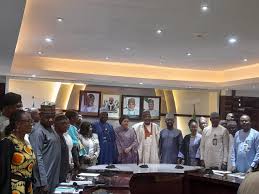
Abbas issued this warning in Abuja while inaugurating a public hearing organized by the House Ad-hoc Committee on Preparedness for the Single-Use Plastic Ban in Nigeria at the National Assembly Complex.
The Speaker, who was represented at the event by the Deputy Chief Whip of the House, Isiaka Ibrahim, recognized the pressing need to tackle Nigeria’s escalating plastic waste issue but emphasized that environmental reforms should be executed in a manner that protects livelihoods.
He stated that plastics are a vital component of Nigeria’s commercial ecosystem, underpinning a vast network of businesses engaged in manufacturing, packaging, distribution, and waste recycling.
He warned that a sudden ban without sufficient planning could lead to unforeseen economic repercussions.
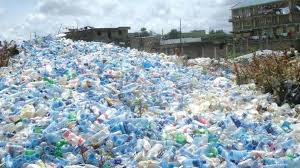
“Our nation is contending with a significant plastic waste crisis that clogs our drainage systems, deteriorates our soil quality, endangers marine life in the Niger Delta and the Atlantic coastline, and ultimately permeates our food chain,” he remarked.
Abbas pointed out that the pervasive presence of plastic waste in urban areas, waterways, and refuse dumps highlights the magnitude of the environmental challenge confronting the country.
He stressed that while Nigeria must take decisive measures to combat plastic pollution, the shift away from single-use plastics should be gradual, inclusive, and backed by clear policy guidance to prevent economic destabilization.
Earlier, the Chairman of the House Ad-hoc Committee on Preparedness for the Single-Use Plastic Ban, Terseer Ugbor, mentioned that the committee had been tasked with formulating a practical legislative framework that reconciles environmental protection with economic considerations.
Ugbor stated that the committee is dedicated to creating a feasible roadmap for Nigeria's shift away from problematic plastic materials.
"We are not here to discuss whether a transition from problematic plastics should take place.
"The crucial question is how this transition can be executed in a systematic, efficient, and fair manner that safeguards both our environment and our economy," he remarked.
He further mentioned that the committee aims to formulate a locally developed policy strategy that will guide Nigeria away from the conventional linear "take-make-dispose" production model towards a circular economy that encourages reuse, recycling, and sustainable innovation.
During the hearing, a coalition of civil society organizations, including the Community Action Against Plastic Waste and the Young Female Journalists Network, voiced strong support for the suggested ban on single-use plastics.
On behalf of the coalition, Errit Effanga called on the Federal Government to synchronize Nigeria's environmental policies with global initiatives aimed at reducing plastic pollution.
She pointed out that global plastic production has surged significantly over recent decades, presenting escalating threats to ecosystems and public health.
Effanga indicated that global plastic production has increased more than 200 times since 1950, with over 11 million tonnes of plastic waste entering aquatic ecosystems annually.
She also cautioned that plastics contain thousands of chemical additives associated with severe health risks, including endocrine disruption, cancer, and reproductive harm.
According to her, over 130 countries have already implemented bans or restrictions on single-use plastics, and research indicates that effective policies can decrease plastic pollution by 30 to 80 percent within a few years.
Nevertheless, representatives from manufacturers and businesses that rely heavily on plastic packaging have expressed concerns regarding an immediate ban.
The Executive Director of the Food and Beverage Recycling Alliance, Onaghise, stated that while the industry recognizes the environmental issues linked to plastic waste, an abrupt prohibition could greatly disrupt business operations and investments.
She revealed that companies within the alliance have already allocated over ₦1.3 billion towards plastic waste collection infrastructure, while the wider industry has pledged more than ₦3 trillion for the establishment of recycling facilities.
Onaghise emphasized that although there are alternative packaging materials such as glass, paper, and aluminum, these options also present environmental and logistical challenges, including increased energy usage during production, higher transportation expenses, and greater resource requirements.
She also pointed out that for sachet water, commonly referred to as "pure water," there is currently no broadly applicable substitute for single-use plastic packaging.
Demands for the regulation or complete prohibition of single-use plastics have escalated in Nigeria in recent years, as environmental organizations, researchers, and policymakers alert the public to the increasing effects of plastic pollution on public health and ecosystems.
Plastic waste has emerged as a significant factor contributing to flooding in various Nigerian cities due to obstructed drainage systems, while substantial amounts of plastic debris have been discovered in rivers, coastal waters, and agricultural areas.
Several state governments, including Lagos State, have declared intentions to limit specific categories of single-use plastics as part of comprehensive environmental reforms.
Globally, governments are increasingly adopting measures to reduce plastic consumption through bans, recycling targets, and the promotion of alternative materials, a trend that has intensified discussions in Nigeria on how to develop a national framework capable of addressing plastic pollution while protecting jobs and investments across the plastic value chain.